
Decarbonization of the Stainless Steel Industry: A Focus on Three Trends
Hattingen, August 2026 – Demands for more sustainable production are increasing throughout the industrial value chain. For the stainless steel industry, this means that reducing CO₂ emissions, the responsible use of resources, and transparent environmental data are becoming increasingly important priorities.
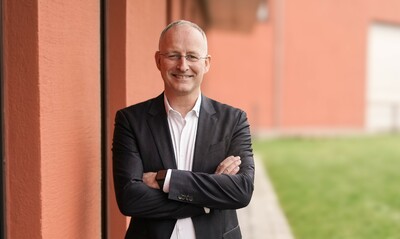
Marc Hidde shared his assessment of the future development of the stainless steel industry in a statement for the trade journal *Stahl & Eisen*.
According to Marc Hidde, managing director of VULKAN INOX GmbH, three developments in particular will shape the stainless steel industry over the next five years:
- the consistent reduction of CO₂ emissions,
- the further development of the circular economy,
- and increasing transparency along the value chain.
For more information on new requirements in the stainless steel industry, see the July/August 2026 issue of *Stahl & Eisen*
Decarbonization is becoming a key factor for success
According to Marc Hidde, reducing CO₂ emissions will continue to grow in importance for the stainless steel industry. The increased use of recycled materials—particularly stainless steel scrap—as well as the use of renewable energy sources offer key opportunities in this regard.
At the same time, stainless steel offers excellent conditions for a functioning circular economy: The material can be almost completely recycled and reused as a raw material.
Because it is nearly 100 percent recyclable, stainless steel is an ideal material for a functioning circular economy. We must continue to build on this strength.
VULKAN INOX Relies on Stainless Steel Scrap and Renewable Energy
For several years now, VULKAN INOX has been implementing measures to reduce the carbon footprint of its stainless steel abrasives.
The company specifically uses pure stainless steel scrap in its manufacturing process. At the same time, VULKAN INOX relies on electricity that is 100 percent renewable throughout the entire manufacturing process.
Combined with an efficient inductive melting process, the company thereby lays the foundation for a particularly low CO₂ footprint for its stainless steel blasting media.
In doing so, VULKAN INOX is pursuing a clear “best-in-class” standard within the stainless steel blasting media industry.
CO₂ transparency is becoming more important to customers
In addition to reducing emissions, transparency throughout the value chain is also becoming increasingly important. In the future, customers and markets will increasingly demand specific and traceable CO₂ metrics.
VULKAN INOX therefore views the calculation and publication of the CO₂ footprint of its stainless steel blasting media as an important step toward making sustainability measurable and comparable.
“Our goal is to set new standards as a pioneer in reducing CO₂ emissions from stainless steel blasting media. We are demonstrating that high product quality, technical performance, and consistent sustainability can be successfully combined,” explains Hidde.
Sustainability as a Key to Future Competitiveness
From VULKAN INOX’s perspective, decarbonization, the circular economy, and transparency are closely intertwined. In the future, companies will be judged not only by the technical performance of their products, but increasingly also by how resource- and emission-conscious their manufacturing processes are.
VULKAN INOX aims to actively shape this transformation and consistently drive forward CO₂ reduction in the production of stainless steel blasting media.